How to Grow Your Optical Business: 9 Strategies That Work Without a Big Marketing Budget

Most advice about growing an optical store assumes you have a marketing department and a budget to match. You don’t. You have a shop to open, clients to serve, lenses to order, and maybe one or two staff. The good news is that the biggest growth levers for an independent optician cost almost nothing — they’re hiding in the clients you already have and the data you’re already collecting.
This is a practical list of nine strategies you can start this week. No agency, no ad spend you can’t afford. Just better use of the relationships, the foot traffic, and the systems already in front of you.
Key insights
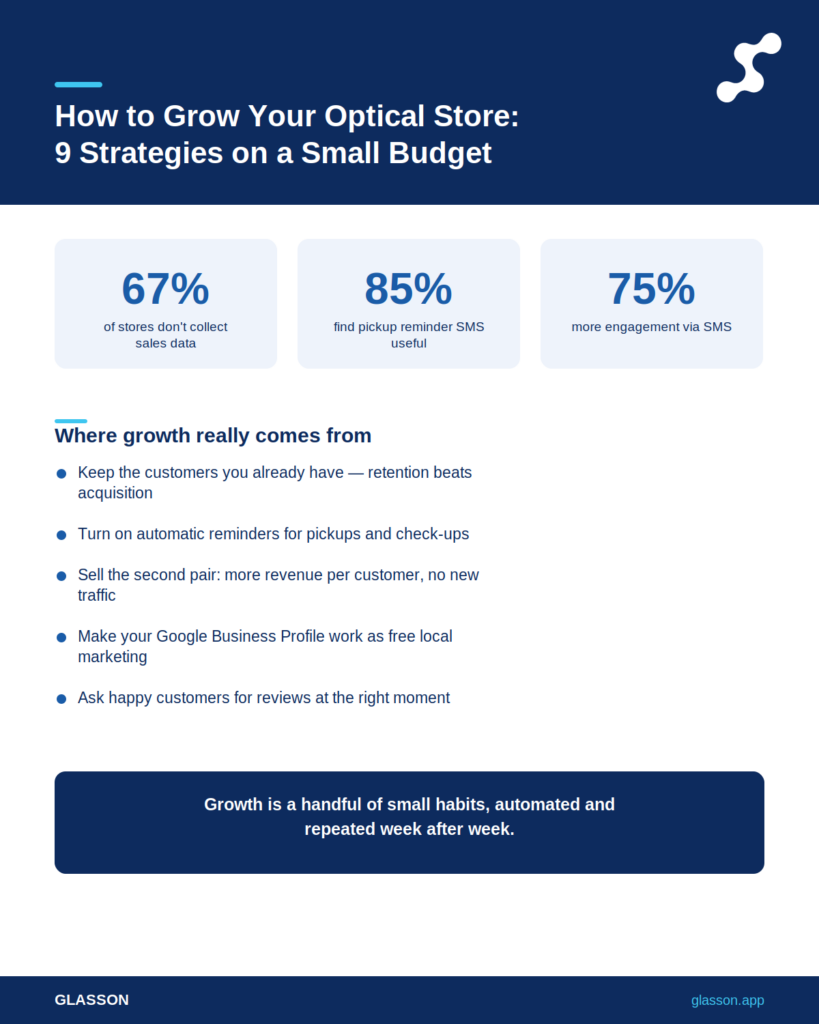
If you read nothing else, read this. Growing an optical store is mostly about keeping the clients you already have and getting more value from each visit — not chasing strangers with expensive ads.
- Retention beats acquisition: winning back an existing client is far cheaper than finding a new one.
- Most stores don’t collect their sales data — doing so is a free competitive edge.
- Automated reminders and recalls bring people back without you lifting a finger.
- Your Google Business Profile and reviews are the cheapest local marketing that exists.
- Second-pair and add-on sales lift revenue per client with zero new foot traffic.
- The right software turns all of this from “things you mean to do” into things that happen automatically.
Why focus on the clients you already have?
Because they’re the cheapest growth you’ll ever buy. A new client has to find you, trust you, and choose you over the optician down the road — all of which costs time and money. Someone who’s already bought from you has done all three, which is why keeping them coming back is the single most cost-effective thing an independent store can do.
With that principle as the backbone, here are the first strategies — all built around the people who already know your door.
Strategy 1: Are you actually collecting your client data?
If you’re not, you’re leaving the easiest growth on the table. On Glasson’s research, 67% of stores don’t collect their client sales data — which means most opticians can’t tell you who their best customers are or when each one is due for new glasses. Start with a proper client record: sales history, prescriptions, preferences, contact details. Glasson Clients keeps all of it on one profile, connected to your sales and marketing.
Once you know who your clients are and what they’ve bought, every other strategy on this list gets easier. Data isn’t an abstraction here — it’s the difference between guessing and knowing.
Strategy 2: Are your reminders working while you sleep?
They should be — a simple text is one of the most reliable revenue tools you have. Glasson Communication sends automated reminders for appointments, ready glasses, and recalls. On Glasson’s figures, 85% of clients find a text reminder to collect their glasses helpful, and stores see up to a 75% rise in engagement when they contact clients by text.
Ever had a client mean to come back for their annual check and simply forget for two years? A recall message catches them before that happens. You set the templates once, and the system handles the rest.
7-day free trial
Got Any Questions? Let us know in the Contact Us form below.
Strategy 3: Are you selling the second pair?
Probably not enough — second-pair and add-on sales are some of the most overlooked revenue in optical retail. A client buying distance glasses may also need readers, prescription sunglasses, or a backup pair. Suggesting the right second pair at the point of sale lifts your revenue per client without bringing a single new person through the door. When their full history and lifestyle notes are on screen, those suggestions feel like service, not a sales pitch.
This is where good records pay off again. If you can see that someone drives a lot or spends their day at a screen, the second-pair conversation writes itself.
How do you bring in new clients without an ad budget?
You make it easy for the people already searching nearby to find and choose you. Local discovery and word of mouth do the heavy lifting for independent stores, and both are nearly free. The opticians who grow on a tight budget are the ones who treat their online presence and their existing clients as a referral engine.
Here are the strategies aimed at new faces — starting with the one most stores neglect.
Strategy 4: Is your Google Business Profile pulling its weight?
For a local optician, it’s the most valuable free listing on the internet. When someone searches “opticians near me,” your Google Business Profile is often the first thing they see. A complete profile — accurate hours, photos of your store, your services, and a steady stream of reviews — does more for local discovery than most paid ads. Keep it current and treat every field as a chance to convert a searcher into a visitor.
Think of it as your digital shop window. The reviews part deserves its own strategy, because it’s where so many stores leave easy wins behind.
Strategy 5: Are you asking for reviews at the right moment?
Most happy clients would leave a review — they’re just never asked. The right moment is when someone collects their new glasses and is visibly pleased. A short, friendly follow-up message a day after pickup, with a direct link to your review page, turns satisfied clients into public proof that you’re worth choosing. You can automate that message the same way you automate reminders.
Reviews compound. Each one makes the next searcher a little more likely to walk in, which feeds the local discovery you set up in Strategy 4.

Strategy 6: Have you made it effortless to book with you?
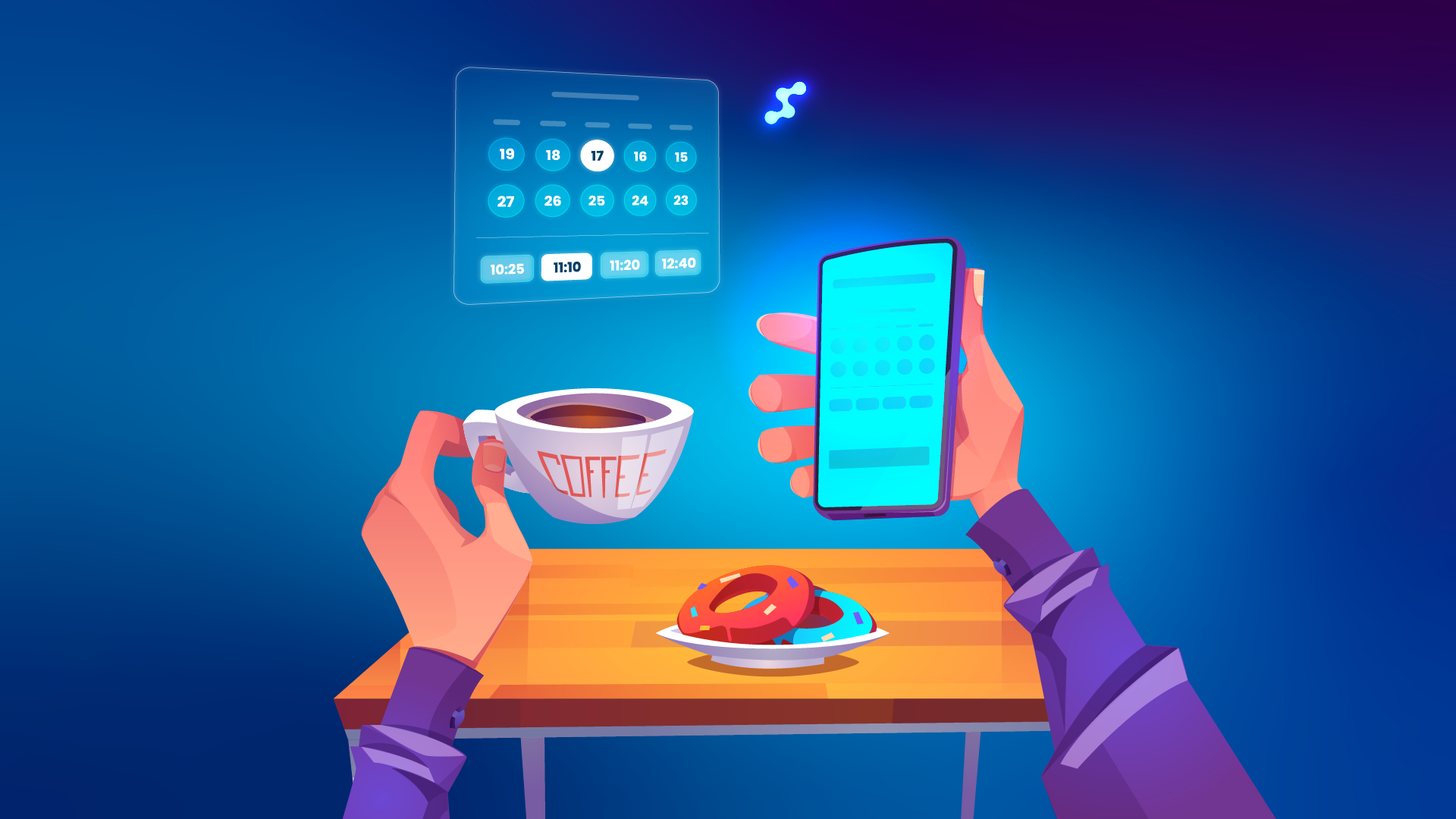
If booking means phoning during opening hours, you’re losing the people who’d rather not call. Glasson Online Reservation gives your store a public booking link you can share on your site, Facebook, or Google, so clients can book 24/7 without picking up the phone. Letting clients book at any hour, from any device, captures the bookings you’d otherwise miss after closing time.
It also takes pressure off your front desk during busy periods, and built-in SMS verification keeps fake bookings out. Fewer missed calls, fewer no-shows, more appointments that actually happen.
Want to see Glasson's full potential?
Book a presentation
How do you grow profit, not just sales?
By watching your numbers and cutting the quiet drains on your margin. Growth that doesn’t reach the bottom line isn’t really growth — it’s just more work. The stores that grow profitably are the ones that know which products sell, which stock sits dead, and where their money actually goes.
The last three strategies are about working smarter with what you’ve got.
Strategy 7: Do you know your real numbers?
Ever made a buying decision on a hunch and regretted it three months later when the frames were still on the shelf? That’s what flying blind costs. Glasson Statistics shows revenue, sales by period, staff performance, and a top-10 of your best-selling products and biggest-spending clients. When you can see which products and clients drive your revenue, you stop guessing and start ordering, pricing, and promoting based on what’s actually happening.
That top-10 list alone is a marketing plan in disguise — it tells you what to feature and who to reward.
Strategy 8: Is dead stock eating your margin?
Frames that don’t sell are money sitting on a shelf doing nothing. Tracking what moves and what doesn’t lets you reorder winners and clear slow stock before it becomes a write-off. Glasson Inventory keeps frames, lenses, and accessories in one place with live stock levels. Knowing your turn rate tells you exactly which lines to promote, discount, or stop buying altogether.
Here’s a quick way to think about how each lever affects growth and what it costs you to pull it.
| Strategy | Cost | Main payoff |
|---|---|---|
| Collect client data | Free | Enables everything else |
| Automated reminders | Low | Repeat visits, fewer no-shows |
| Second-pair selling | Free | Higher revenue per client |
| Google Business Profile | Free | Local discovery |
| Review requests | Free | Trust & new clients |
| Online booking | Low | Captured after-hours demand |
| Track your numbers | Low | Smarter decisions |
| Manage dead stock | Low | Protected margin |
“Owners always ask me what new thing they should do to grow. Almost always, the answer is to do the basics they’re already half-doing — but consistently, and with a system instead of memory. The store that texts every client when their glasses are ready, asks every happy customer for a review, and actually reads its sales reports will out-grow the store chasing the next clever tactic. Growth is boring. That’s why it works.”
— Marcin Debski, Product Manager @ Glasson
Strategy 9: Are your tools working together or against you?
If your booking, sales, stock, and client notes live in separate places, you spend your day copying information between them instead of growing. The ninth strategy ties the other eight together: put them in one connected system. When your client records, inventory, communication, and statistics share the same data, every strategy on this list runs almost automatically instead of relying on you remembering to do it. You can see how the pieces fit on the Glasson features overview.
That’s the real unlock. Not a single magic tactic, but a setup where doing the right thing is the easy thing.
Test Glasson for 7 days free of charge
Any questions? Leave your contact details and we'll call you back.
Where should you start?
Start with the free stuff that compounds: get your client data into one place, switch on automated reminders, and tidy up your Google Business Profile this week. You don’t need all nine strategies running at once — you need the first few working consistently, then build from there.
Growth for an independent optician isn’t a campaign you launch. It’s a handful of small habits, made automatic, repeated week after week. Pick one strategy, set it up properly, and let it run while you get back to your clients.
Frequently asked questions
What’s the cheapest way to grow an optical store?
Keeping and re-engaging the clients you already have. Retention through reminders, recalls, and good service costs far less than advertising for new clients and produces more reliable revenue.
Do I really need to collect client data?
Yes — it’s the foundation for almost every growth tactic. Without client records you can’t run recalls, personalise service, or know who your best customers are. Most stores skip this, which makes it an easy edge.
How do automated reminders increase revenue?
They bring clients back and cut no-shows. Reminders for ready glasses, appointments, and check-up recalls keep your store in clients’ minds and turn intentions into visits. Most of the work happens automatically once set up.
Is online booking worth it for a small store?
Often yes, because it captures demand outside opening hours. A public booking link lets clients reserve 24/7 without calling, which picks up appointments you’d otherwise lose. It also reduces phone load during busy times.
How do I get more online reviews?
Ask satisfied clients at the right moment with an easy link. A short follow-up message after pickup, with a direct link to your review page, converts happy clients into public recommendations. Timing and ease are what matter.
What is second-pair selling and why does it matter?
It’s offering a relevant additional pair — readers, sunglasses, a backup — at the point of sale. Second-pair sales raise revenue per client without needing any new foot traffic, and feel like good service when based on the client’s real needs.
Which numbers should I track to grow?
Start with revenue, best-selling products, top clients, and stock turn. Knowing what sells and who spends lets you order, price, and promote based on evidence instead of guesswork. Good reporting tools surface these automatically.
How does dead stock hurt my growth?
Unsold frames tie up cash that could fund products people actually want. Tracking turn rate lets you clear slow lines and reorder winners, protecting the margin that funds growth. Live inventory data makes this visible.
Do I need expensive software to do all this?
No — you need a connected system at a fair price. An integrated tool turns these strategies into automatic processes, and transparent providers publish their pricing so you can budget without surprises.
How quickly will I see results?
Some strategies pay off almost immediately, others compound over months. Reminders and online booking can lift visits within weeks, while reviews and retention build steadily over time. Consistency is what makes the difference.